| | by admin | | posted on 10th January 2023 | | views 3973 | |
William Penn: The Holy Experiment
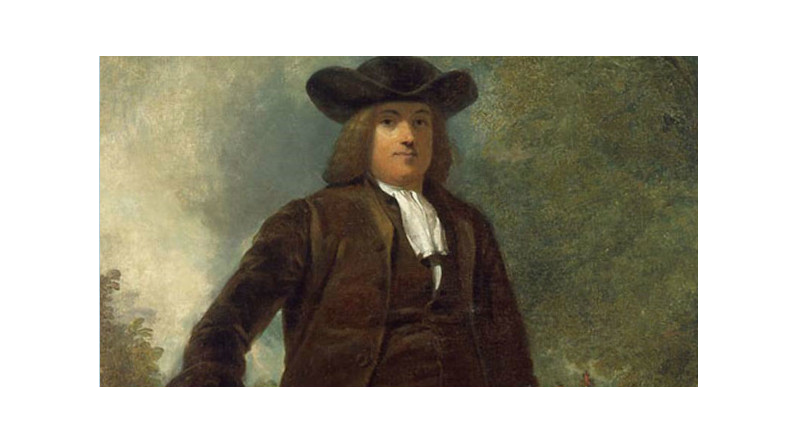
William Penn (1644 - 1718) used the power granted to him to create Pennsylvania and its capital Philadelphia as a ‘Holy Experiment’, testing whether a society could be built on liberty of conscience and limited authority.
Faith against authority
Penn was born in 1644, London, the son of an admiral whose loyalty to the Crown placed the family close to power. He came of age during the upheaval of the English Revolution, a period that exposed deep tensions between authority, conscience, and the structure of society itself.
As part of a privileged family, Penn received an excellent education, attending Chigwell School before studying at Oxford. Yet it was there that he first encountered ideas that would disrupt his life. Drawn toward the emerging Quaker movement, he found himself in conflict with the expectations of both university and family. Quakerism rejected hierarchy, titles, and enforced religion, insisting instead on the authority of inner conviction.
This commitment came at a cost. Penn was expelled from Oxford for being a Nonconformist and later imprisoned for attending Quaker meetings. His most defining moment came in 1670, when he stood trial for unlawful assembly. Refusing to plead in conventional terms, Penn defended the right to worship freely, helping to secure a landmark affirmation of jury independence in English law. The conflict with his father deepened, and for a time Penn was cast out, dependent on the support of other Quaker families.
Imprisonment did not silence him. While held in the Tower of London for publishing The Sandy Foundation Shaken, a work condemned as blasphemous, Penn continued to write in defence of religious liberty, arguing that conscience could not be governed by force. These experiences shaped a central conviction that would define his life: that authority, if it was to be just, must be restrained.
From persecution to experiment
By the early 1680s, conditions for Quakers in England remained uncertain, marked by fines, imprisonment, and exclusion from public life. Penn began to consider whether a different kind of society could be built elsewhere, one where the principles he had defended in court might be put into practice.
In 1681, King Charles II granted Penn a vast tract of land in North America, settling a debt owed to his father, Admiral Sir William Penn, and placing him in control of what would become Pennsylvania. The colony was named in honour of his father, not himself.
Yet rather than using that authority to consolidate power, Penn treated it as an opportunity to test a different idea: that a society could be organised around liberty of conscience, fair governance, and peaceful coexistence.
At its centre, Penn planned a new city, Philadelphia. Laid out with ordered streets and open spaces, it was intended not only as a place of settlement, but as a visible expression of balance and fairness. This was what Penn called his ‘Holy Experiment’: an attempt to align political structure with moral principle.
In designing Pennsylvania, Penn sought to limit arbitrary authority through representative institutions, protect freedom of worship, and establish just relations with Native American communities. The experiment was not abstract. It was grounded in land, law, and daily life, shaped by the belief that power could be used to create conditions in which it no longer dominated.
Philadelphia and the shape of a new society
In 1682, Penn crossed the Atlantic with a group of settlers to begin turning principle into practice. Philadelphia, the city he had planned, was laid out in a clear grid, with wide streets and open public spaces intended to prevent overcrowding and promote civic balance. It was not only a place to live, but a statement of intent: that order could exist without domination.
Pennsylvania quickly became a refuge for those facing religious persecution across Europe. Quakers formed its core, but the colony welcomed people of many faiths. Its Frame of Government established elected assemblies, limits on executive power, and protections for liberty of conscience. In a period when most states enforced religious uniformity, this marked a radical departure.
Penn also pursued peaceful relations with Native American communities, meeting leaders in person and negotiating land agreements rather than seizing territory by force. He described this approach as living as “neighbours and friends”, seeking coexistence rather than conquest. Though not free from tension or imbalance, these relationships contrasted with the violence seen in many other colonies.
At the heart of the Holy Experiment was a simple but demanding idea:
“No people can be truly happy, though under the greatest enjoyment of civil liberties, if abridged of the freedom of their consciences.”
Here, power was not removed, but redefined. Laws were to serve the people rather than control them, and authority exercised with restraint. Pennsylvania became a working attempt to align governance with conscience, translating belief into structure.
The limits of the Holy Experiment
The experiment, however, was never free from difficulty. Penn remained both a Quaker committed to equality and a proprietor responsible for the colony’s success. This dual role created tensions between ideal and reality, especially as the population grew and economic pressures increased.
After returning to England in 1684 to resolve disputes, including a boundary conflict with Lord Baltimore, Penn faced mounting financial problems. At one point he lost control of Pennsylvania through debts and legal complications, and spent time imprisoned for debt. The distance between vision and administration became harder to sustain.
Even within Pennsylvania, the balance he had sought was not always maintained. Questions of governance, property, and authority continued to emerge, testing the limits of a system built on restraint. The Holy Experiment endured, but not without compromise, shaped as much by circumstance as by intention.
When Penn returned to Pennsylvania in 1699, he found a colony that had grown and prospered, but was no longer entirely within his control. After a short stay, he was compelled to return once more to England, where he spent his later years dealing with financial and political difficulties.
Legacy: Power restrained
William Penn died in 1718, after years marked by financial strain and declining health, a contrast to the position of influence and wealth from which his experiment had begun.
Yet what he left behind was not simply a colony, but a set of ideas that would outlast him. Pennsylvania and Philadelphia continued to develop as places shaped by religious freedom, representative government, and civil rights, influencing the political culture that would later emerge in the United States.
His vision helped establish that liberty of conscience could be protected in law, and that government could be structured to limit its own power. These were not abstract principles, but practices tested in the daily life of a working society.
Philadelphia would go on to play a central role in American history, becoming the site where the Declaration of Independence was signed and home to the Liberty Bell. Yet the deeper legacy of Penn’s work lies not only in these later events, but in the example he set: that authority can be used to create conditions in which it no longer dominates.
In Pennsylvania, he is still remembered with a certain familiarity, residents often referring to him affectionately as ‘Billy Penn’, a sign that the founder of the colony remains part of its living identity.
In this, Penn stands within a wider tradition that sought to confront injustice without reproducing it, showing that power, when restrained, can become a foundation for peace.
Leave a comment
Our mission
Lincolnshire Radical History documents the people, places, and movements where Lincolnshire’s history of dissent continues into modern activism.
Hosted by

Upcoming Events
Lincoln Festival of History
(May Bank Holiday)
Local History Festival
(throughout May)
Heritage Open Days
(June–September)